Chateau Clipart - Vintage Doodles for Storybook Design
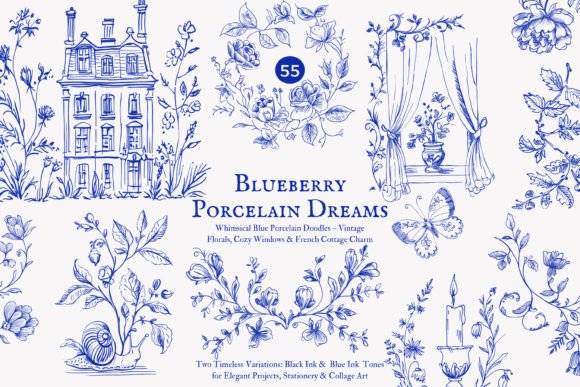
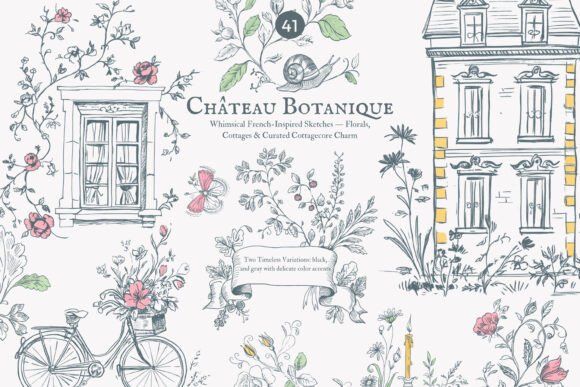
There’s a particular kind of charm that doesn’t shout but whispers. It’s found in the soft arch of a dormer window, the delicate curl of a vine, and the gentle suggestion of a cottage wall. This is the world of the Chateau Clipart - Vintage Doodles bundle. It’s not a font in the traditional sense, but a curated collection of illustrated elements—41 architectural and floral motifs, each presented in two versatile color versions. Think of it as a visual vocabulary for crafting scenes that feel timeless, personal, and rich with narrative.
The appeal lies in its hand-drawn, vintage doodle aesthetic. Lines are soft and sketched, never harsh or overly precise. The illustrations capture the essence of French countryside architecture and romantic florals with a light, airy touch. One version presents the elements in classic black and gray, offering a sophisticated, monochromatic base. The second introduces gentle color accents—soft pastels that feel like a watercolor wash, adding warmth without overwhelming the delicate line work. This duality provides incredible flexibility for different project needs and color palettes.
Where This Clipart Collection Truly Shines
Understanding a design asset’s personality is the first step. Knowing where to apply it is where strategy comes in. The Chateau Clipart - Vintage Doodles set excels in projects that benefit from a handcrafted, nostalgic, and elegant sensibility. Its strength isn’t in body text or data-heavy infographics, but in adding visual storytelling and decorative detail.
For brand identity, these elements are perfect for businesses in the wedding industry, artisanal goods, boutique hospitality, or any brand that wants to convey heritage, romance, and bespoke quality. Imagine a wedding stationery suite where these sketches frame the invitation text, or a small bakery’s logo featuring a chateau-inspired doorway. The illustrations become part of the brand’s visual language, creating immediate recognition and emotional connection.
In editorial and packaging design, the clipart can transform a layout. Use them as decorative dividers in a magazine, spot illustrations in a cookbook, or elegant borders for product labels. The transparent PNG backgrounds make them easy to layer over photographs, textured papers, or solid colors, integrating seamlessly into complex compositions. For digital creators, they are a goldmine for social media graphics, blog post headers, and Pinterest pins, adding a distinct vintage flair that stands out in a fast-scrolling feed.
Practical Integration: Making the Elements Work for You
Having beautiful assets is one thing; using them effectively is another. The key is to treat the Chateau Clipart as components of a larger system. Start by evaluating the two color versions. The black and gray set is ideal for projects where you want to apply your own brand colors or when printing in a single color is necessary. The pastel-accented version is ready for projects where that soft, romantic color story is desired, saving you time in post-processing.
Consider visual hierarchy and scale. These detailed illustrations are best used as supporting actors, not the lead. A single chateau element used as a focal point in a logo design can be powerful. Scattered as a repeating pattern in the background of a website header, they create texture and interest. In web design, they can accentuate pull quotes, section breaks, or navigation menus, guiding the user’s eye with charming visual cues.
One of the most valuable aspects of this collection is its potential for creating unique combinations. Don’t just use a single sketch. Combine a window element with floral vines and architectural corners to build a custom frame or vignette. This approach allows you to develop a cohesive visual system for a project, ensuring consistency across all touchpoints—from the main invitation to the thank you card, from the product hang tag to the social media announcement.
Aligning the Asset with Your Project's Needs
Before diving in, ask a few practical questions. Does your project’s tone call for this level of delicate, vintage detail? A cutting-edge tech startup might find it incongruous, while a historical novel’s cover or a lavender farm’s marketing materials would be a natural fit. Test the elements at their intended size. The high-resolution 300dpi files scale down beautifully for digital use and maintain clarity for print, but always check the legibility of details in your specific context.
Think about font pairing. The charm of these doodles is best complemented by typefaces that don’t compete. A clean, modern serif font can provide elegant contrast and excellent readability for body text. A simple sans serif can offer a contemporary balance, letting the illustrated elements take center stage in the decorative space. Avoid overly ornate script fonts, as the combination of two highly detailed styles can create visual clutter.
Finally, remember the licensing. This is a commercial font asset, meaning you can use it in projects for sale, client work, and merchandise. This opens the door for entrepreneurs and designers to create and sell physical products like printed stationery, decals, or apparel, as well as digital products like printable art or Canva templates. The included two versions and high-resolution files provide a robust foundation for both small-scale crafts and professional, large-format printing.
The Chateau Clipart - Vintage Doodles bundle is more than a set of pretty pictures. It’s a versatile toolkit for injecting storybook charm and vintage elegance into a wide array of creative work. By understanding its aesthetic personality and applying it thoughtfully, you can create designs that feel deeply personal, professionally polished, and authentically engaging. It’s about adding a layer of handcrafted narrative that resonates on a quieter, more intimate level.